Name the problem you are trying to solve
Write whether the replacement is for damaged hardware, a different opening action, easier cleaning or a change in appearance. If water is escaping, record when and where it appears. Do not assume the enclosure is the cause simply because water is visible near its edge.
Take ordinary photographs of the whole shower, lower edges and any accessible labels. Keep previous invoices or product documents. Do not remove glass, seals or panels to gather evidence; the installer can decide what inspection is needed.
Assess the retained base as part of the proposal
Ask the installer to inspect the tray and its relationship to the walls, enclosure and drainage. The key outcome is a written decision about what can remain, what needs work and what is still unknown. A cosmetic shortlist should not get ahead of that decision.
Use the adjustment-range guide for final fit. If the tray is curved, also use the quadrant pairing sheet; nominal size alone is insufficient.
| Item | Record before ordering |
|---|---|
| Tray | Identity, condition and acceptance by installer |
| Drainage | Known symptoms and inspection outcome |
| Walls and finishes | Old holes, damage and making-good scope |
| New enclosure | Exact code, fitting range and movement |
| Uncertainty | Who will check it and when |
Make hidden assumptions visible in the quote
An enclosure-only quote may assume sound existing walls and a serviceable tray. Ask what happens if removal exposes a problem and how additional work would be agreed. Do not describe every eventuality as included without a written scope.
Old profiles may leave marks or holes beyond the new profile’s footprint. Ask whether matching tiles or panels are available and how any making good is proposed. A narrower frame can change what becomes visible even when the new enclosure fits.
Use a retain, inspect or replace decision
For each component, choose one status: accepted for retention, awaiting inspection, or included for replacement. Add the person responsible and the document supporting the decision. This prevents an unknown being silently treated as reusable.
Bring the record to the showroom, alongside your preferred door movement. The product conversation can then focus on compatible alternatives while the site questions remain clearly assigned.
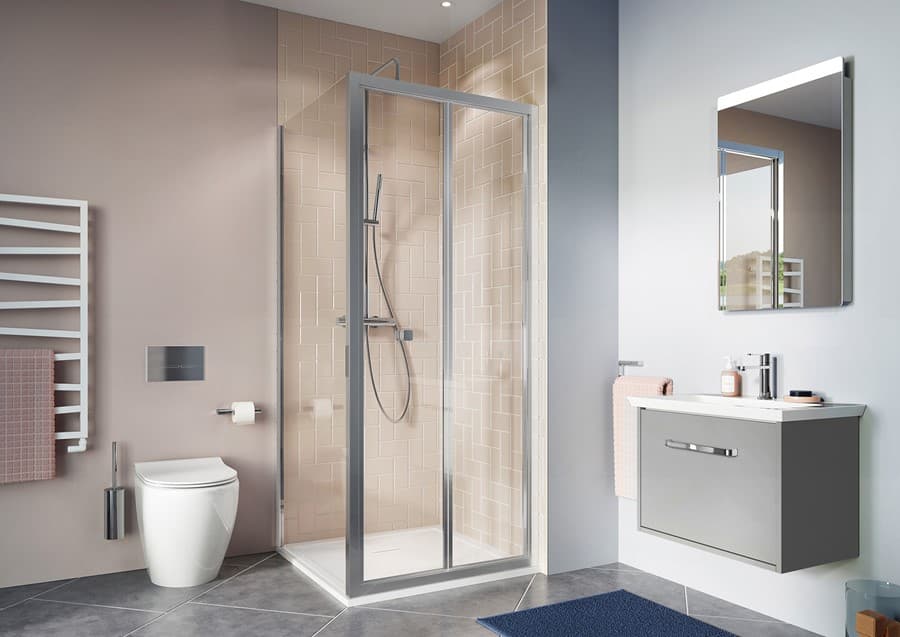
The pictured supplier example is Clear 6 Bi-fold Door & Side Panel. Use its exact specification when comparing options; the image does not confirm stock, showroom display availability or suitability for your room.
Sources & further reading
Prepared with AI assistance from the linked sources and Elegant Haven’s published service information. This guide helps you prepare decisions; product suitability and installation details need confirmation for your own room. It is not a record of a completed Elegant Haven installation or an expert sign-off.