Gather the seven inputs
For each system, obtain the full and reduced litres per flush from the current specification or installer confirmation. Use the flush-volume evidence guide if the documents are unclear. A blank volume means the comparison is not ready; it must not be treated as zero.
Then enter the household's daily full-flush count, reduced-flush count and number of days. Use observed counts where practical or label your own estimate when saving the result. If routines differ substantially between weekdays and weekends, calculate those periods separately rather than implying one daily pattern describes them all.
Follow an illustrative worked example
The starting values are examples: system A uses 6 litres full and 3 litres reduced; system B uses 4.5 litres full and 3 litres reduced. With four full and eight reduced flushes per day, A uses 6 × 4 + 3 × 8 = 48 litres. B uses 4.5 × 4 + 3 × 8 = 42 litres.
Across 365 identical days, those totals are 17,520 and 15,330 litres. The difference is 2,190 litres, or 2.19 cubic metres because 1 cubic metre equals 1,000 litres. These numbers demonstrate the calculation; they are not claims about the pictured control, an existing toilet or a recommended cistern setting.
| Illustrative system | Per day | Over 365 days |
|---|---|---|
| A: 6 L full / 3 L reduced | 48 litres | 17,520 litres |
| B: 4.5 L full / 3 L reduced | 42 litres | 15,330 litres |
| A minus B | 6 litres | 2,190 litres / 2.19 m³ |
Read the comparison with its limits
The result shows whether B uses less, more or the same water for the entered routine. It does not judge flushing performance or whether the pairing is compatible. If a system needs repeat flushes in practice, those extra operations belong in an observed routine; they are not automatically predicted here.
For a single-flush comparison, use its one verified volume in both volume fields for that system, so every counted operation uses that amount. If comparing two single-flush systems only, put all daily operations in the full-count field and set the reduced count to zero. Keep the meaning of your inputs with the saved output.
Use the result as an appointment note
Copy or download the comparison and add the product codes and evidence for the volumes to your own notes. Changing an input clears the previous result so you do not accidentally save an old answer. Reset restores the illustrative values. Entries are processed in this page and are not sent as an enquiry or appointment request.
Waterwise's guidance also highlights waste from leaks and the importance of understandable dual-flush controls. Use the control-reach and identification trial when choosing, and the running-water observation report if an existing toilet appears to keep flowing. Neither issue is resolved by a lower calculated total.
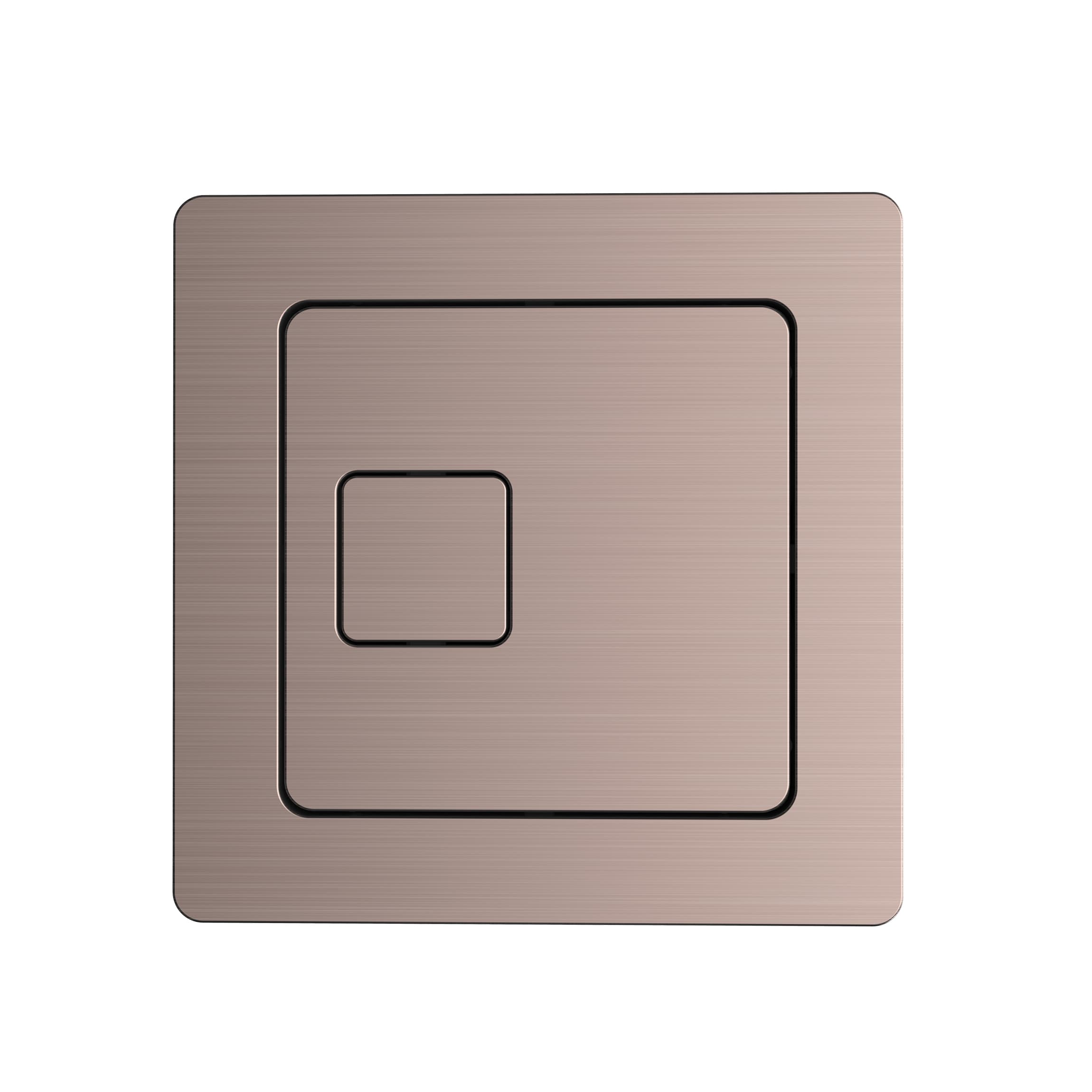
The pictured Square Brushed Bronze Dual Flush Button illustrates a dual-flush control only. No flush volume or compatibility has been inferred from that image; the calculator example is independent of it.
YOUR PLANNING TOOL
Compare two flush systems.
Starting values are an illustrative example. Enter the verified full and reduced volumes for each compatible pan and cistern. Counts are for the whole household, not per person. Use the same daily routine to compare both systems.
Enter both systems and your routine, then compare.
Entries stay in this page and are not sent or saved. This model excludes leaks, costs, energy and shower-toilet washing water. It does not recommend changing a cistern setting or guarantee a saving.
Discuss toilet choices at an appointment →Sources & further reading
Prepared with AI assistance from the linked sources and Elegant Haven’s published service information. This guide helps you prepare decisions; product suitability and installation details need confirmation for your own room. It is not a record of a completed Elegant Haven installation or an expert sign-off.