Write down how the control will be used
Start with the household rather than a standard mounting number. Note whether people expect to use the control while seated, after standing, or with assistance. Record any difficulty with small buttons, twisting, pulling or seeing a low-contrast symbol. These observations help define the product questions without pretending to be an accessibility assessment.
The proposed seat height also affects the trial. Use the comfort-height comparison if that is changing. Where mobility or assistance needs are significant, obtain suitable individual advice for the whole toilet arrangement rather than relying on a control alone.
Ask for a practical demonstration
On an appropriate display, try the intended press, pull or lever movement with permission. Notice the direction, reach and space for the hand. A photograph cannot show how a mechanism feels, and a loose plate sample cannot fully represent its fitted operation.
For a raised traditional cistern, include the chain or lever position on the high and low level elevation. For a concealed system, check whether a shelf or worktop changes the angle of approach to the plate.
| Trial | Record |
|---|---|
| Seated reach | Position and whether stretching or twisting feels necessary |
| Standing reach | Approach and obstacles |
| Operation | Button, lever or chain; action demonstrated |
| Identification | How each flush function is recognised |
| Room conflicts | Shelf, open lid, furniture or door in the way |
Check that the two functions make sense
Do not assume the largest visible button always means the largest flush in every design. Ask for the manufacturer's explanation and try identifying the functions without prompting after the demonstration. Waterwise's dual-flush buyer guidance highlights clear control identification as a useful question when choosing a toilet.
Think about guests and household members who have not read the instructions. If the operation is confusing, record that as a real drawback on the shortlist. Clear operation matters to the routine used in the water comparison; theoretical volumes alone do not describe which button people will actually press.
Resolve alternative controls before ordering
Geberit's range includes different actuator arrangements, including special and remote options. That does not mean a remote button can be added to any cistern. Ask for the compatible components, required services and installation conditions of the exact option. Use the flush-plate matching record to keep those details together.
Bring your trial notes to the appointment with a sketch of the proposed position. The useful result is a control arrangement that has been considered in the actual room, with personal observations and technical confirmation recorded separately. Do not replace that process with a universal height taken from an unrelated display.
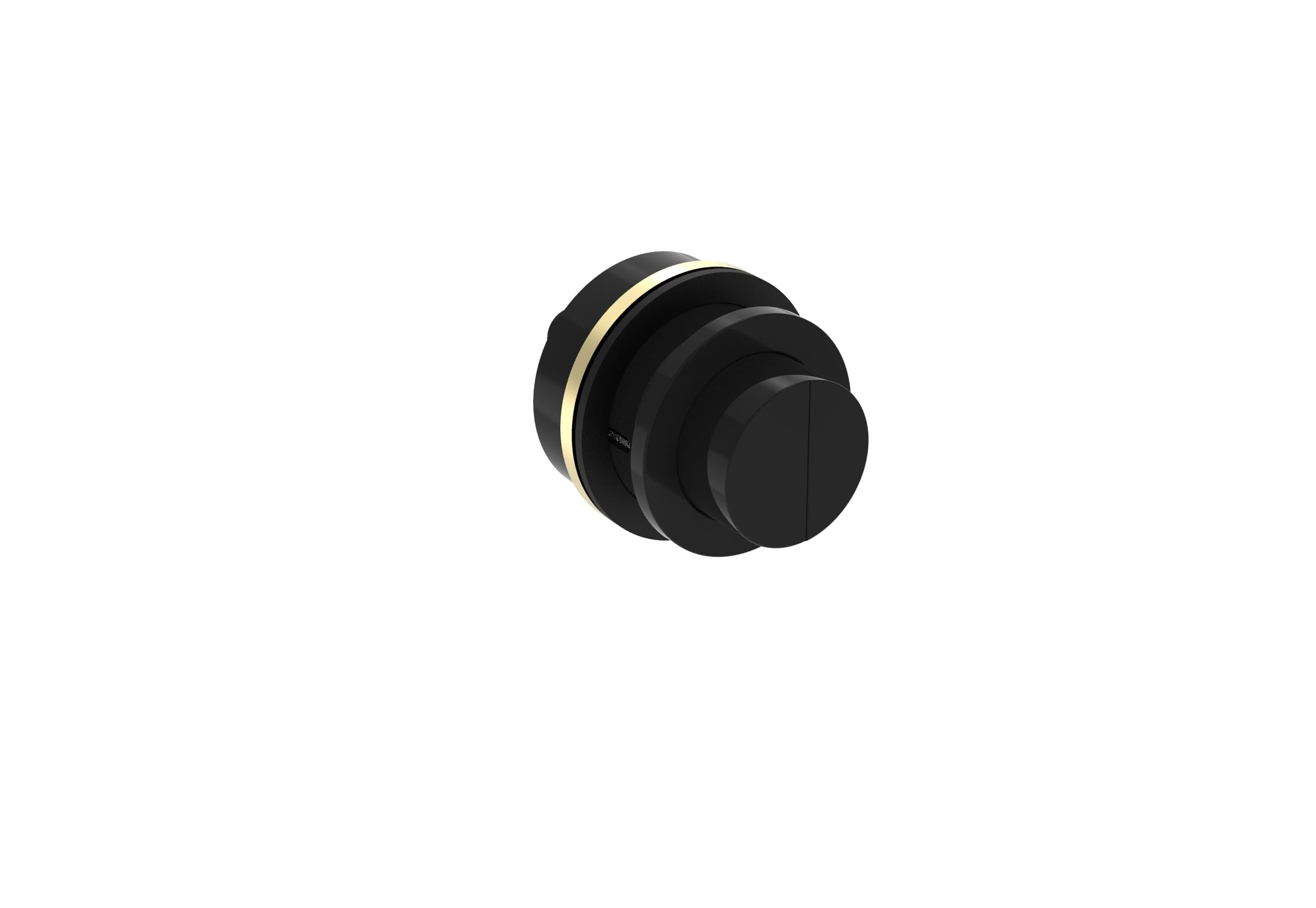
The supplier image is from the FLUSHE 2.0 brass flush button (for HC2030) - Satin Black PVD listing. Check the exact specification, included parts and available showroom examples before choosing. The illustration is not an Elegant Haven installation or proof of suitability for your room.
Sources & further reading
- Geberit: actuator plates and flush controls ↗
- Waterwise: dual-flush buyer tips, March 2021 ↗
- Burlington: Standard high-level single-flush WC ↗
Prepared with AI assistance from the linked sources and Elegant Haven’s published service information. This guide helps you prepare decisions; product suitability and installation details need confirmation for your own room. It is not a record of a completed Elegant Haven installation or an expert sign-off.