Describe the sequence without diagnosing it
If the existing toilet is safely usable, note the order of ordinary sounds: operation of the control, water entering the bowl, refilling and any seat movement. Record whether the sound is brief, continues after use or occurs when nobody has flushed. You do not need to dismantle anything to make that distinction.
Avoid assigning a cause from sound alone. A knock, hiss or trickle is an observation to report to a plumber, not proof of a particular valve fault. If water seems to run continuously, use the running-water report rather than treating it as a normal acoustic preference.
Record the room that hears it
Draw the toilet and the neighbouring bedroom, landing or living space where the sound matters. Note whether it is heard through an open door, a shared wall or another route you can describe without opening the building. Time of day can explain the concern: a sound unnoticed at midday may be disruptive at night.
Geberit's water-engineering information discusses flushing and filling as different parts of system design. That distinction is useful when asking for evidence. It does not establish that changing the ceramic pan alone will address sound transmitted through the structure or pipework.
| Observation | Example wording |
|---|---|
| When | During refill, after flush, during seat closure or between uses |
| Where heard | Bathroom, adjacent bedroom or landing |
| Character | Rushing, clicking, knocking or continuous trickle |
| Duration | Brief or continuing; approximate timing if useful |
| Priority | Night use, shared wall or another specific concern |
Ask what the quiet claim measures
When a supplier describes a system as quiet, ask which operation, model and test conditions the claim covers. A decibel figure without a method, distance and setup is difficult to compare. If equivalent evidence is unavailable for two products, leave that comparison unknown rather than inventing a ranking.
A named flushing design such as Geberit's TurboFlush concerns a specific system. It should not be generalized to every rimless pan. Likewise, a soft-close seat addresses a seat movement; it does not make refilling or drainage silent.
Discuss the complete proposed arrangement
Share your observations with the designer and installer before choosing the enclosure or pan. For a concealed system, the finished wall and frame plan helps make the construction question explicit. For a traditional exposed system, include the cistern elevation and pipe route.
Your brief should state the sound that matters, where it is heard and what remains unconfirmed. Ask what can reasonably be assessed for the exact room and which product evidence is available. The result is a focused discussion of likely options, not a promise that a particular style will be silent.
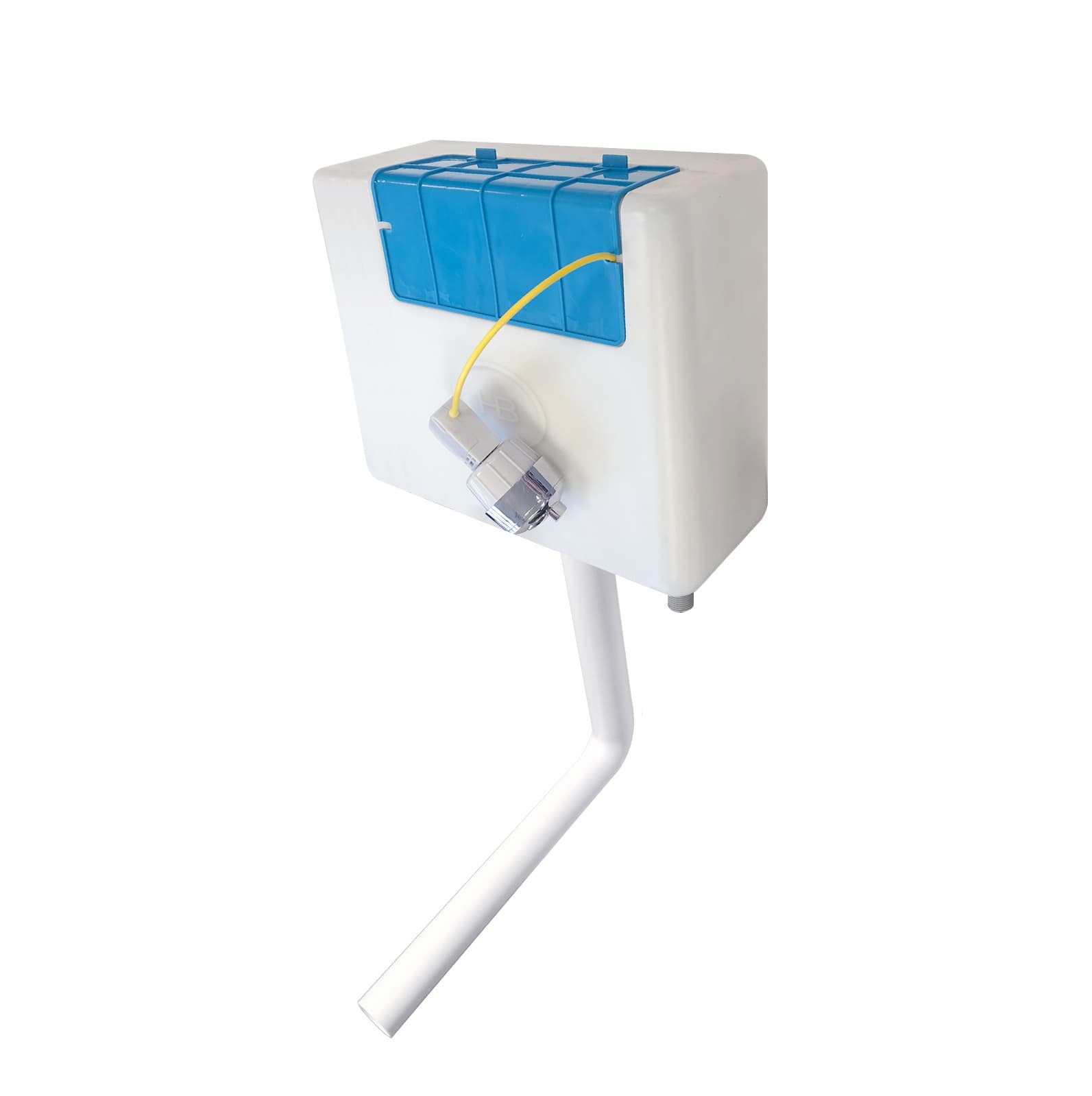
The supplier image is from the Concealed Cistern with Bottom Inlet listing. Check the exact specification, included parts and available showroom examples before choosing. The illustration is not an Elegant Haven installation or proof of suitability for your room.
Sources & further reading
Prepared with AI assistance from the linked sources and Elegant Haven’s published service information. This guide helps you prepare decisions; product suitability and installation details need confirmation for your own room. It is not a record of a completed Elegant Haven installation or an expert sign-off.