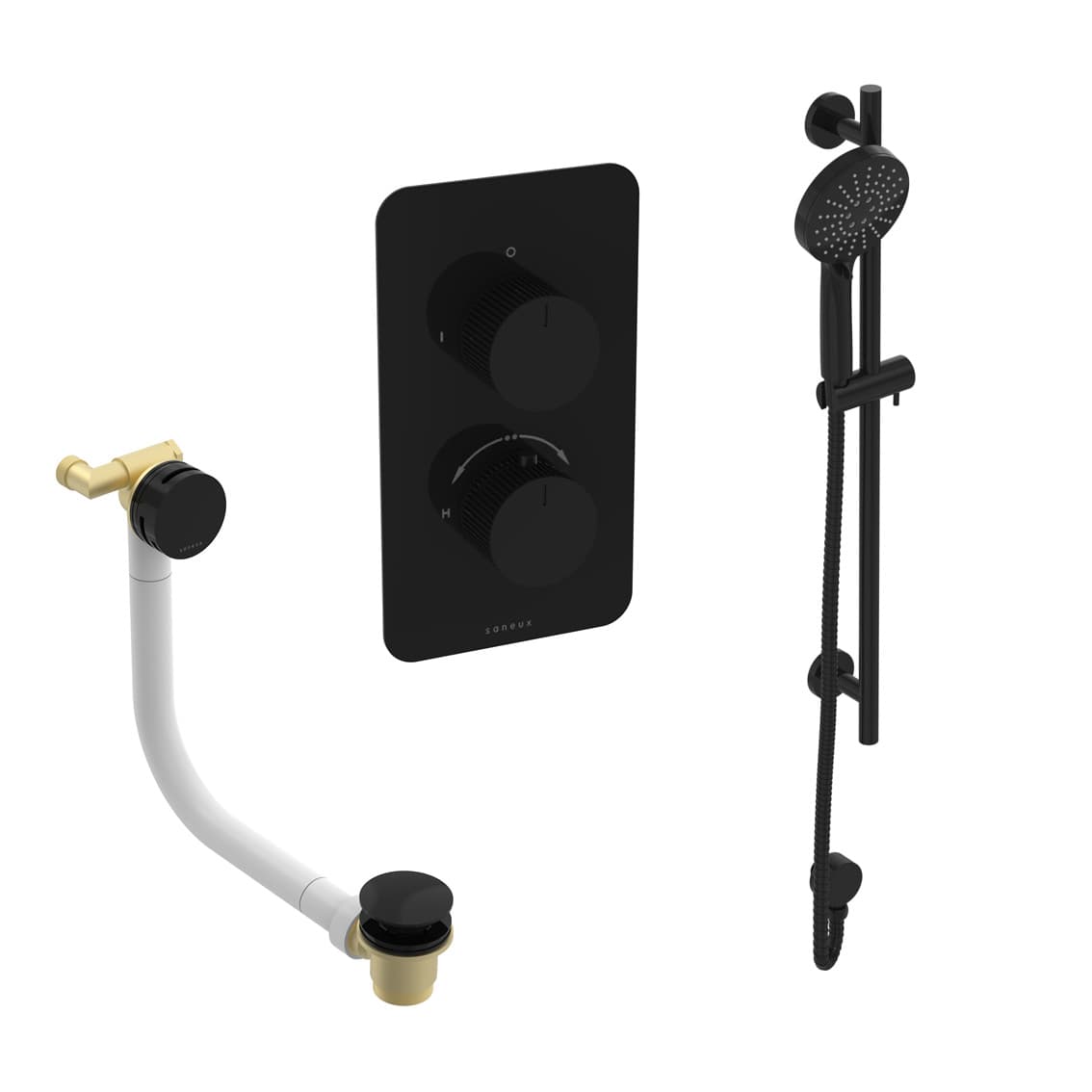
Describe what you want the shower to do
Start with your daily routine. Do you mainly want an overhead shower, a handset you can move, or both? Does anyone need controls that are easier to identify or reach? Do you want to turn the water on without standing underneath it? These are useful design questions that do not depend on choosing a brand first.
Write down which functions you expect to use together. A product described as having two outlets does not, by that description alone, tell you every operating combination. Ask the supplier to demonstrate or document how the particular controls select and operate the proposed outlets.
Keep preferred features separate from requirements. If the household mainly wants a comfortable everyday shower and an easy-to-use handset, that brief may lead to a different shortlist from one centred on several additional functions. Neither brief establishes what the existing installation can support.
Move from a range name to a complete list of codes
Crosswater MPRO is one example where the precise configuration matters. The manufacturer’s Crossbox MPRO two-outlet product page for PROCB1500RF lists PROCB1500LBPF_V3 and CROSSBOX as included components. That is a specific package example, not confirmation that every MPRO listing contains the same parts.
For the shortlisted shower, obtain a dated quotation showing the chosen finish, control configuration, concealed or exposed components, outlets and accessories. Ask which items are included, which are ordered separately and which existing parts, if any, are intended to remain.
Do not use a photograph of a finished control plate as the installation specification. Keep the current technical documents with the product codes so the supplier and installer can review the same version.
| Item to identify | What the record should answer |
|---|---|
| Valve or control package | What is the complete product code and finish? |
| Concealed components | Which exact body and other hidden parts are included? |
| Outlets | Which overhead shower, handset or other outlet is proposed? |
| Operation | Which functions can be selected, and what combinations are intended? |
| Other parts | Which arms, hoses, brackets or connections are included or excluded? |
Ask the installer to confirm the home-side requirements
Give the professional responsible for the shower the shortlist before ordering. Ask them to confirm the relevant water-supply and hot-water arrangements, any performance requirements stated by the manufacturer, and whether the complete proposed combination is suitable. Do not guess from a neighbour’s system, a boiler photograph or an unverified pressure figure.
An unanswered question should remain visible in the record. For example: existing supply arrangement awaiting installer assessment, exact valve variant awaiting supplier confirmation, or proposed simultaneous operation awaiting manufacturer documentation. A clear pending item is more useful than writing compatible without naming who checked it.
If a product change is suggested, ask why and what else must change with it. Keep the revised parts list together. This avoids approving one replacement while leaving another component from the previous proposal on the order.
For a replacement, identify what is already installed
A replacement project needs its own checks. Take ordinary photographs of the visible controls and any accessible product paperwork, and record the symptoms or limitations you want to resolve. Do not dismantle concealed equipment simply to collect information for a showroom visit.
Ask the installer to identify the existing system and decide what can reasonably remain. A similar-looking control, a matching brand name or a familiar finish is not an approval to exchange parts. Confirm the exact manufacturer-supported replacement or have a complete alternative specified.
Also ask how inspection, access and making good are included in the work. A quote that assumes retaining existing concealed equipment has a different scope from a proposal to replace it. Resolve that assumption before comparing headline prices.
Compare proposals by the result and the checked scope
Consider an illustrative pair of quotes. Proposal A lists a control package and overhead outlet. Proposal B lists a control package, overhead outlet and handset, with an explicit installer compatibility review. They are different proposals even if both are described as a new shower. First decide which functions you actually need, then align the parts and installation scope.
Use a short approval table: exact codes confirmed, intended operation understood, installer assessment complete, additional work described and supply responsibility agreed. Leave a column for the person answering each question and the document or quotation containing the answer.
If you have also changed the tray, screen or room layout, show the updated plan to the designer and installer. Product compatibility and room usability are connected decisions, but they require different checks. A technically suitable valve does not settle the layout.
Order only the configuration that has been reviewed
Before payment or dispatch, check that the order still matches the reviewed product list, including finish and variant. A substitute with a different code should trigger a new check of the affected components and operating requirements.
Keep the quotation, approval notes and product documents for handover. Your useful outcome is an agreed shower configuration with known functions and named responsibility for the technical checks. It is not a set of product names that the installer must reconcile after delivery.
For a closer comparison, use the exposed or concealed valve checklist, control trial and pressure-and-flow evidence sheet.
Sources & further reading
Prepared with AI assistance from the linked sources and Elegant Haven’s published service information. This guide helps you prepare decisions; product suitability and installation details need confirmation for your own room. It is not a record of a completed Elegant Haven installation or an expert sign-off.