Start with the surfaces you actually want to change
Write down which walls are included: the shower enclosure, the wall beside the bath, the basin splashback or every wall. Then mark windows, niches, pipes and fittings on photographs. This gives both options the same scope. A quote for panels only inside a shower cannot be compared directly with a tiled proposal for the whole room.
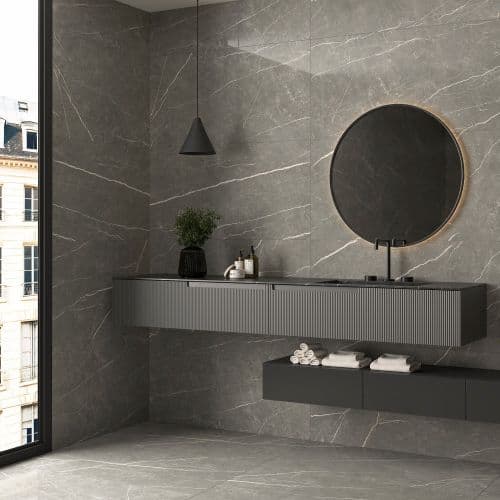
Separate appearance from the job the finished surface must perform. You may want a continuous stone effect, a deliberate grid of smaller tiles or a quieter background behind patterned flooring. Those are useful design preferences. Ask the installer to confirm which complete system suits the particular location and existing background, rather than deciding from the sample alone.
Compare the details where the room changes direction
Ask for a sketch or sample detail showing the places you will see every day. Large uninterrupted surfaces can look very different from the finished edges around a small window. Do not leave these decisions until the material is being fitted.
| Detail | Ask about the panel proposal | Ask about the tile proposal |
|---|---|---|
| Corners and exposed edges | Which joint or profile will be visible, and in what finish? | How will edges and corners be finished? |
| Window reveals | How will the reveal meet the main wall surface? | Where will cuts and joints fall around the window? |
| Niche or shelf | Is the feature included in the selected system and quote? | What is the proposed lining, edge and tile layout? |
| Taps and other fittings | Who confirms the detail around each penetration? | Who confirms the detail around each penetration? |
| Future access | Which fittings need service access, and how is it retained? | Which fittings need service access, and how is it retained? |
Confirm the system behind the decorative finish
BAL explains that tiles, adhesive and grout alone do not replace an appropriate waterproofing system in wet areas. A tile selection therefore leaves a separate specification question: what complete installation is proposed for this room? Obtain that answer from the responsible professional.
For a panel example, Multipanel links product performance and warranty conditions to its installation, sealing and maintenance requirements. Treat the selected panel range and its instructions as a system to be checked, not permission to use any panel, adhesive or joint detail interchangeably.
These manufacturer examples do not determine which option is right for your bathroom. Ask the installer to name the proposed products, confirm compatibility and explain any preparation that cannot be assessed until the old finish is removed. Record who will approve a change if the exposed background differs from the assumption in the quote.
Ask for two quotes built around the same assumptions
Use one room description for both proposals. Include removal of existing finishes, assessment and preparation, the decorative finish, edge details, work around fittings, waste removal and making good. If a line is excluded, show that clearly. Compare the complete totals only after those differences have been resolved.
For example, imagine proposal A includes shower panels and trims but excludes removal of the old wall covering. Proposal B includes tiles, removal and preparation. The material price or headline total cannot tell you which complete job costs less. Ask for the missing work to be priced or explicitly retained as an allowance before making a decision.
Use the bathroom quote comparison guide to record exclusions and assumptions. Avoid converting a sample price per square metre into a finished-room budget: it does not describe the amount of preparatory work or all the details in your particular room.
Check a useful sample and a realistic care routine
View the shortlisted samples with the proposed floor, furniture and metal finishes. Ask to see more than a close-up photograph: the repeat, scale and joint treatment may affect whether the design feels calm or busy. If a display cannot show your exact arrangement, keep that limitation in the decision record.
Request the care instructions for the actual selected products. Multipanel’s panel guidance specifies mild cleaning and avoiding abrasive products. This is a product-specific instruction, not a cleaning recipe for every surface in the room. Keep separate instructions for panels or tiles, metal fittings and furniture.
Record the exact range, colour and product code, not just a descriptive colour name.
Ask how a damaged section would be assessed and what replacement would involve.
Confirm whether spare material is recommended for the particular proposal.
Keep the approved edge, joint and grout choices with the samples.
Finish with a choice the supplier and installer can follow
A useful decision is specific: selected finish, areas covered, approved details, responsible installer, agreed preparation assumptions and unresolved questions. Add one sentence describing why it wins for your household, such as a preferred pattern or a care routine you are comfortable following.
If one option still has an unanswered installation question, mark it as pending. You can settle the visual shortlist at a showroom appointment while leaving the technical approval with the professional responsible for the room. That is more useful than ordering around an assumption and changing the design later.
Sources & further reading
Prepared with AI assistance from the linked sources and Elegant Haven’s published service information. This guide helps you prepare decisions; product suitability and installation details need confirmation for your own room. It is not a record of a completed Elegant Haven installation or an expert sign-off.