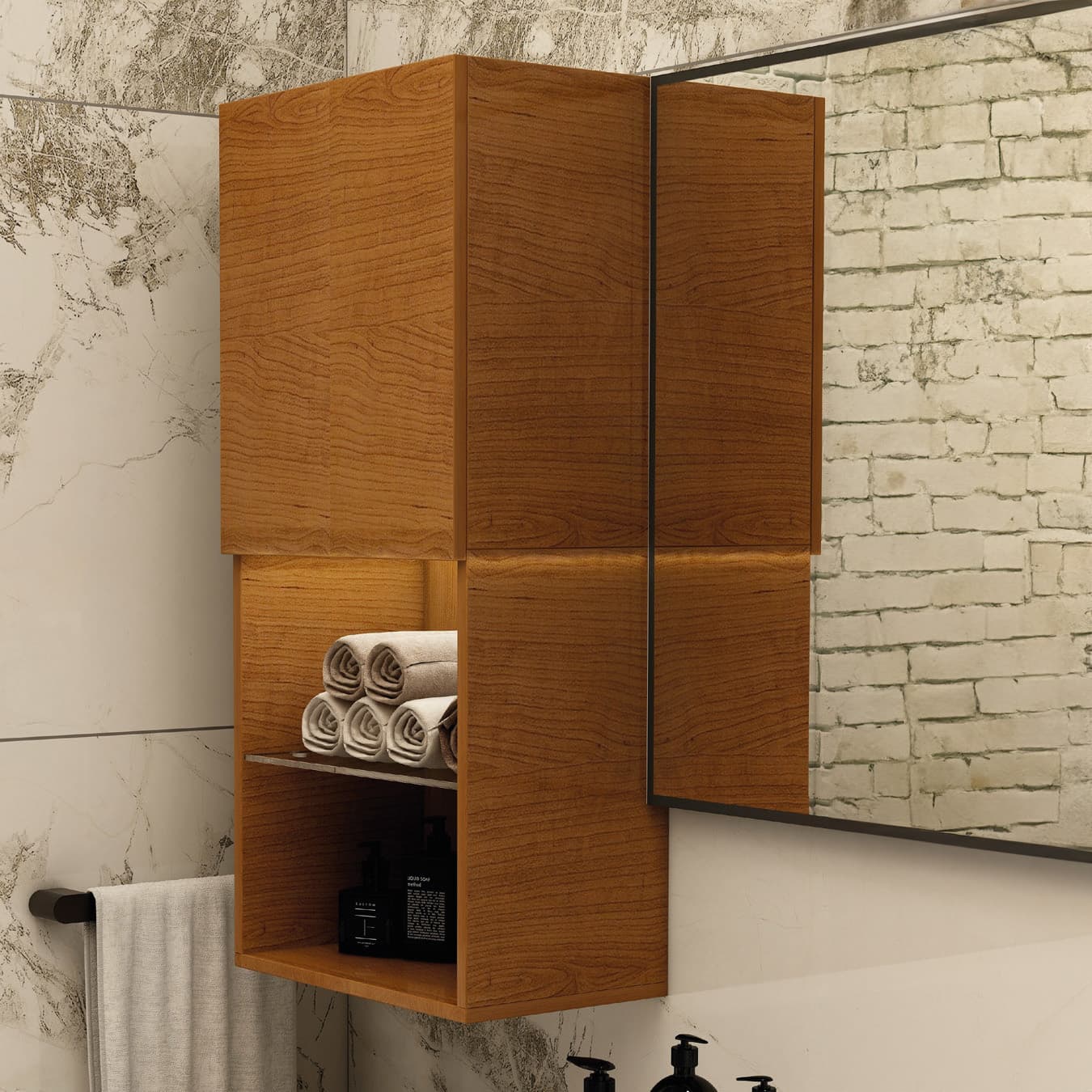
Count by routine, not by cupboard
Empty one accessible storage area at a time onto a dry surface and group its contents by the person or routine they serve. Keep medicines and cleaning products stored according to their labels and household safety needs while you work. You are planning where things go, not assuming every product belongs in a humid bathroom.
Separate items used at the basin every morning from spare bottles opened only occasionally. Record your normal maximum stock, including the refill that arrives before the old bottle is empty. A cabinet sized for today's nearly empty shelf may feel cramped on delivery day.
| Group | Record | Planning consequence |
|---|---|---|
| Everyday personal items | Owner and number of containers | Convenient retrieval position |
| Dry towels and spare rolls | Normal maximum quantity | Dry shelf capacity |
| Refill bottles | Largest height and footprint | Shelf spacing and lifting room |
| Cleaning supplies | Label storage requirements | Appropriate separate location |
Measure the awkward items first
A tall pump bottle, wide hairbrush or folded towel can decide the shelf layout more than the total number of small objects. Measure each awkward item at its widest point, including lids and handles. Leave room to grasp it without disturbing everything beside it; this is a practical trial, not a universal clearance number.
Do not convert the outside dimensions of a vanity into usable litres. Panels, hinges, drawers and the basin plumbing occupy part of that box. The drawers-or-doors trial helps you compare access once the actual contents are known.
Allocate a place before adding furniture
Sketch three simple zones on your room plan: items used at the basin, dry reserves and items leaving the room. Decide which everyday objects can sit on an open shelf and which need a door. A small accessible cupboard may serve you better than a large one hidden behind a door swing.
Keep dry towel storage separate from the place towels hang after use. Give the laundry basket and its removal route their own space rather than treating them as whatever floor area remains.
Bring a one-page storage brief
Write down the three items that are hardest to store now, the approximate quantity in each group and anything that must remain reachable without bending or stretching. Bring one empty representative container or its measurements if it would help explain the problem.
At your showroom appointment, ask which selected cabinet interiors can be inspected and which need a technical drawing. Mark any unconfirmed dimensions on the brief. Do not choose extra furniture merely to fill an empty wall; first identify the problem that piece will solve.
The supplier illustration comes from the Liberty wall storage cabinet in Cherry Walnut listing. Confirm the exact specification, stock and available showroom examples before choosing; the image is not an installation approval.
Sources & further reading
Prepared with AI assistance from the linked sources and Elegant Haven’s published service information. This guide helps you prepare decisions; product suitability and installation details need confirmation for your own room. It is not a record of a completed Elegant Haven installation or an expert sign-off.