Measure the basket in its working state
Record the base and the widest upper dimension; a tapered basket can be wider at its rim than at the floor. Include handles, a projecting lid and any liner that changes the way it is lifted. If you have not chosen a basket, mark a provisional maximum envelope on the plan.
For illustration, a basket body 35cm wide with handles extending 2cm on each side occupies 39cm across those handles. That simple addition is not a recommended basket size. It shows why a body-only measurement can miss the part that catches on a doorway or cupboard.
Test opening and removal
Put a safe lightweight stand-in at the proposed position and rehearse opening the lid or lifting out a liner. Check whether your hands and arms have room without striking the basin or a shelf. Do not load a basket heavily just to run the trial.
Trace the route to the bathroom door with the basket held as you would normally carry it. Check the main door, a shower screen and an open vanity drawer. A basket that fits when every door is closed can still block an essential movement.
Maximum width and depth including handles
Height with the lid open
Space to lift the liner or whole basket
Route past the basin and toilet
Access to cabinet doors and plumbing
Position during bathroom cleaning
Choose the location around the routine
Ask whether laundry is collected daily or waits for a larger wash. The answer affects the size you want to keep in the room and how often the removal route is used. Revisit the bathroom storage stocktake if the basket is competing with items that could live elsewhere.
Keep the dry towel reserve distinct from used laundry. Choose a basket and location appropriate for the room and its manufacturer's care instructions; a cabinet is not automatically a ventilated laundry compartment.
Show the movement on the plan
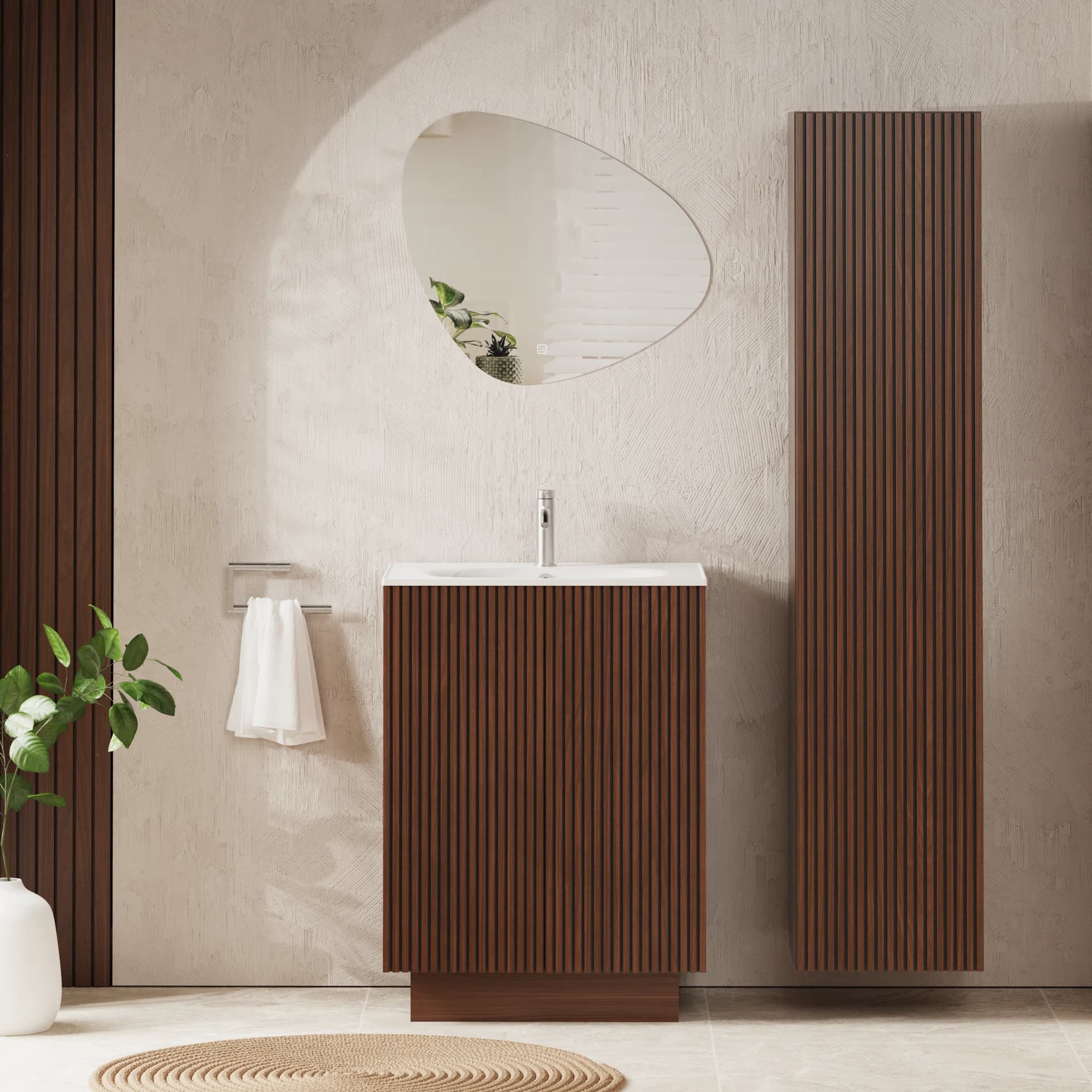
Mark the basket footprint, opened lid and removal route as three separate things. The supplier scene accompanying this guide illustrates surrounding cabinetry; it does not identify the tall cabinet as a hamper or promise that it can hold one.
Bring those measurements to your showroom appointment. Ask the designer to retain the working space in the final layout rather than adding the basket only after the fixed furniture positions have been agreed.
The Limit Tower Unit illustrates surrounding bathroom cabinetry, not a laundry hamper. No hamper mechanism or basket capacity has been assumed for it.
Sources & further reading
Prepared with AI assistance from the linked sources and Elegant Haven’s published service information. This guide helps you prepare decisions; product suitability and installation details need confirmation for your own room. It is not a record of a completed Elegant Haven installation or an expert sign-off.