Start with three ordinary routines
Write down what happens in the bathroom on a typical morning, evening and night. At the mirror you may want a clear view for shaving or makeup. In the evening you may prefer a quieter atmosphere. At night you may want enough light for a short visit without choosing the same setting as the morning.
Describe the task before naming a product. For example, I want to see my face comfortably at the mirror is more useful than I want a brighter bathroom. Explain any frustration with the current room: an awkward switch, a reflection you dislike or a mirror light that someone keeps forgetting to turn off.
Ask every regular user about their routine. Different preferences need not produce a complicated scheme, but they should be visible before one person’s preferred setting becomes the only option.
Separate the jobs, then ask which fittings can do them
Use a simple task table to help the designer discuss the room. These are desired outcomes, not instructions for electrical positioning or proof that a particular fitting is suitable for a bathroom location.
| Routine or area | Describe the desired result | Question for the design discussion |
|---|---|---|
| Mirror tasks | A comfortable view for the actual grooming tasks | What can we try in person, and how will the mirror be used? |
| Entering and moving around | A room that is straightforward to use | Which control turns on the everyday room lighting? |
| Bathing or winding down | The preferred atmosphere for this household | Can the chosen scheme offer that setting without unwanted complexity? |
| Night-time visit | An agreed lower-intensity option, if desired | How would it be selected and turned off? |
| Cleaning | A useful view of surfaces and storage | Is a different setting wanted for this task? |
Try the exact mirror’s controls and functions
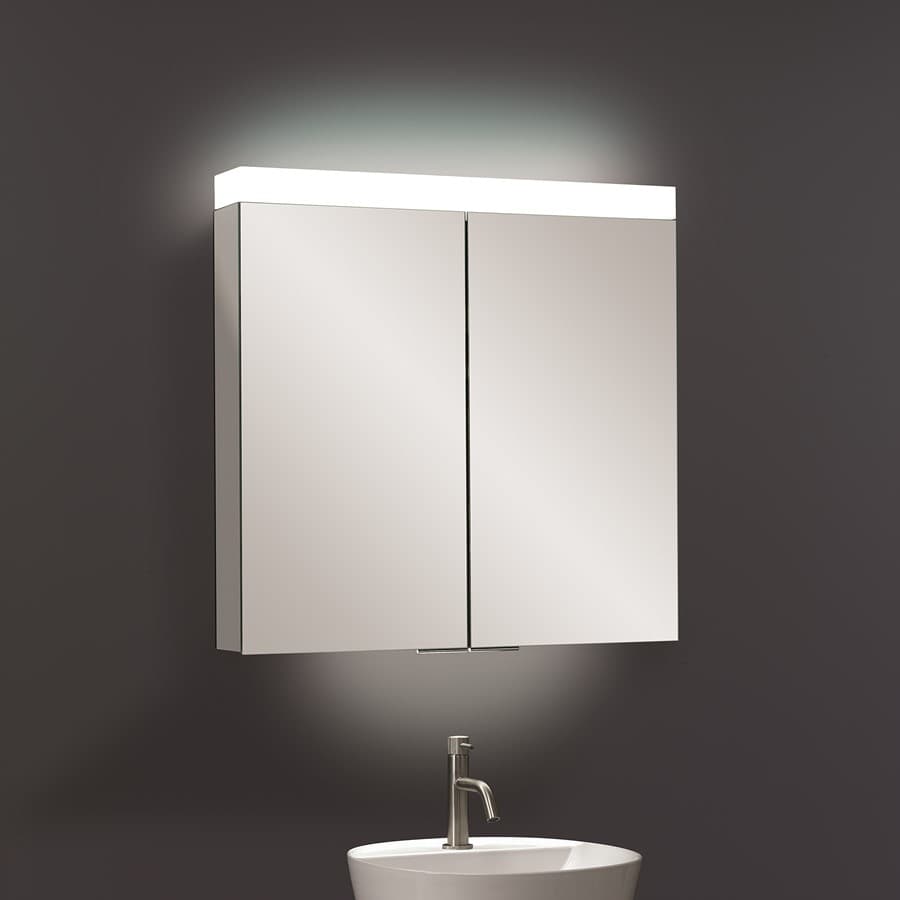
Manufacturer examples can help you define a preference. Roper Rhodes describes adjustable brightness and colour temperature with an infrared control on its System illuminated mirror. Those are features of that product; they do not mean that every illuminated mirror or bathroom light has the same adjustment or control method.
When a suitable display is available, ask to see the sequence for switching on, adjusting and switching off. Check whether each person finds it understandable. Ask what happens after the supply is switched off and restored, whether settings are remembered, and what the product documentation confirms.
Consider how the mirror would sit with the vanity and the rest of the room. A photograph of a mirror against a blank wall cannot answer whether its controls are convenient in your proposed arrangement. Keep the exact model and intended position on the plan for professional review.
Describe a few scenes without specifying the wiring
For an illustrative household, the morning preference might be room lighting plus a chosen mirror setting; the evening preference might be a different, individually selected combination; the night preference might be a simpler option identified by the designer. This is a wish list to assess, not a promise that a particular set of products can provide those combinations.
For each desired scene, write down who selects it, what they do and how it is turned off. If the proposed answer needs several unfamiliar steps, ask whether it can be simplified. A control that looks discreet in a photograph may still need explanation to guests.
Avoid adding automation solely because it is offered. If you want automatic behaviour, describe the trigger and the outcome you expect, then ask the designer and electrician whether the proposed system can provide it appropriately. Keep a straightforward manual-use question in the brief as well.
Give the electrician the plan before fixing product choices
Electrical Safety First advises using a registered electrician for bathroom electrical installation. Give that professional the proposed room plan and exact product information so they can assess suitability, positions, controls and the electrical work required.
Mark the bath or shower, mirror, vanity, door and other planned fixtures. Record any layout changes promptly. Do not choose a fitting location from an inspiration photograph or treat a product’s bathroom label as approval for every position in your room.
Ask the quote to show responsibility for supply, electrical work, controls, making good and any required documentation. If one party supplies a mirror while another installs it, confirm who checks the model before the order is placed. This is particularly useful where a late substitution could change the planned functions or installation requirements.
Keep an approved lighting and controls record
Finish the brief with the desired routines, shortlisted models, intended positions and unanswered questions. Distinguish a visual preference from a product function that has been demonstrated, and from an electrical detail that the professional has approved.
At handover, ask for a demonstration of the selected controls and keep the product instructions with the bathroom records. Check that the household understands everyday operation and the approved care advice. The best outcome for this brief is a room people can use confidently, with the technical decisions made by the responsible professional.
Coordinate your room-lighting brief with the mirror size and position trial and the illuminated-mirror features checklist. A mirror feature list does not replace the room's lighting and electrical assessment.
List the exact mirror and light models with their intended functions.
Record the agreed everyday switching sequence in plain language.
Mark any adjustment or automatic feature that remains unconfirmed.
Keep the final plan and professional documentation alongside the product instructions.
Sources & further reading
- Electrical Safety First — bathroom electrical safety ↗
- Roper Rhodes — System illuminated mirror and controls ↗
Prepared with AI assistance from the linked sources and Elegant Haven’s published service information. This guide helps you prepare decisions; product suitability and installation details need confirmation for your own room. It is not a record of a completed Elegant Haven installation or an expert sign-off.